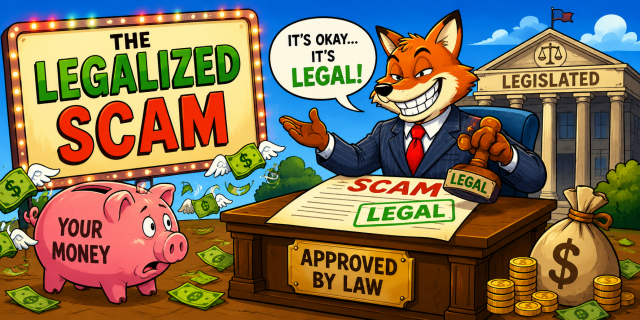
The Two Faces of Theft
I’m going to say this loudly: We spend all our time telling people to watch out for online scams, while they are being legally robbed every single day.
We call a criminal a malicious social engineer when they exploit human psychology to trick someone into a financial mistake. That is a scam. But what about when a vendor tricks you into paying four times what something is actually worth? Apparently, that is just the “art of marketing and advertising.”
“The only reason you haven’t been hacked by a cybercriminal is often because you haven’t been targeted yet. But you are being targeted by corporate pricing algorithms every single day.”
If I trick you into paying an extra $150 or $200 every single month on a bloated cable or mobile bill, I am not a criminal. If a grocery store marks up basic items by 20% to 50% just because they can, nobody calls the cops.
The Irony of the System
Think about the total scale of it: if a bad actor tricks someone into handing over a $150 gift card, people scream to the high heavens. You remember it forever, and it makes you alert. But if a telecom carrier bleeds you dry for hundreds of dollars extra month after month, the law looks the other way.
It reminds me of how governments treat alcohol and tobacco. They tell you it destroys health, but instead of stopping the harm, they just slap a heavy tax on it so they can collect the cash.
Modern legal scamming is more normalized and encouraged now than at any point in human history. I am not talking about wire fraud or shady overseas schemes. I am talking about the basic, everyday reality where you and I pay ten times more “scam money” to legitimate corporations than bad actors will ever touch.
Adding More Examples to the Pile
Look around, the examples are everywhere once you pull back the curtain:
- The Printer Ink Trap: You buy a printer for fifty bucks, only to find out that a set of replacement ink cartridges costs almost as much as the machine itself. That is not manufacturing cost; that is a captive market trap designed to milk you indefinitely.
- The Software Subscription Maze: Remember when you bought software once and owned it? Now, companies lock basic features behind a monthly SaaS paywall, charging you hundreds of years for code that hasn’t changed in a decade.
- The Airline Baggage Game: You buy a ticket advertised at one price, only to get nickel-and-dimed for a carry-on bag, picking your own seat, and printing a boarding pass. By the time you board, you’ve paid double the baseline fare for zero extra service.
- The Grocery Store Next Door: Two supermarkets sit literally next door to each other, selling the exact same brand of eggs and meat with a massive price difference.
Please do not sit there and tell me this is just “capitalism.” This is pure exploitation of an open system that preys on people who don’t have the time to audit every single receipt.
The Real Target
The only reason you haven’t been hacked by a cybercriminal is often because you haven’t been targeted yet. But you are being targeted by corporate pricing algorithms every single day.
Next time you get worked up over a basic phishing email, step back and look at how massive, normalized, and legally protected the corporate advertising scam really is. Stop playing their game, stay away from the noise, and protect your pockets.